

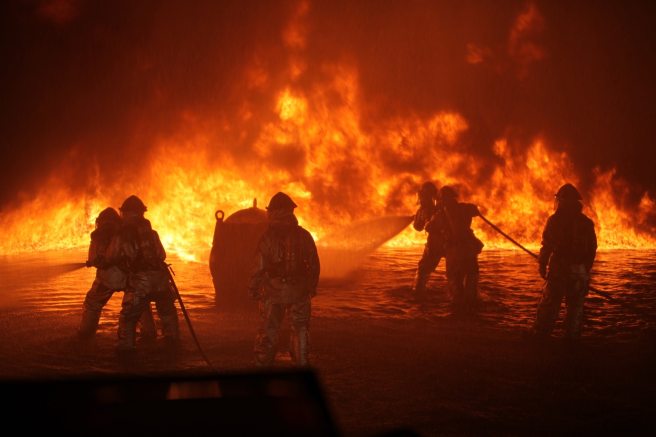
David Attenborough has called the Australian bush fires ‘the moment of crisis’ to address climate change. Change is what Australia needs and it should look directly at its economic strategy.
The Australian economy follows a traditional GDP growth measure of success. However, GDP does not differentiate between economic growth that pollutes and growth that is environmentally responsible. It looks increasingly redundant in the times that we live in. Australia has pursued economic growth through the use of natural resources such as: coal, iron ore and other carbon emitting fossil fuels. GDP as a measure does not capture the risk associated with following an economic strategy directly leading to global warming.
The mining industry contributes to around 10% of Australia’s GDP. Australia is a land full of natural resources, with an abundance of coal, gold, iron ore and other raw materials. This has led to Australia producing electricity using coal fired power stations and being extremely slow to embrace clean renewable energy.
A consequence of following an energy policy derived from fossil fuels means the country has a poor emissions record. In 2018 Australia emitted 16.8 tonnes per capita, very similar to the US levels of 16.1 tonnes per capita, this compares to Denmark on 5.8 and the UK on 5.6.
GDP growth is starting to look increasingly outdated for measuring economic success. The damage caused by the Australian fires hardly impacts GDP. The true financial cost of the devastation is taken by insurance companies. The only negative to GDP measurement is that it may affect some income from tourism or income from businesses that could not trade during the fires.
New Zealand has moved away from using GDP to a more progressive measure ‘Economic Living Standards’ that incorporates a set of measures including environmental ones. Globally the Genuine Progress Indicator (GPI) is the most widely used method to replace GDP. The GPI is a macro-scale analysis of the benefits and the costs associated with economic activity. This method would take into account the negatives of generating economic growth through the burning of fossil fuels.
Donald Trump has said that the US will exit the Paris Agreement because they will ‘protect their economy’. They see reducing emissions and economic growth as opposing aims.
The US uses GDP as their measurement of success and this reinforces their view to some degree, but its time countries took an economic measurement that promotes sustainable long term growth that benefits future generations.
Having a green economic policy does not have to be negative for the economy. The actions of a single business in Denmark cut the emissions footprint of the entire country by more than half. Orsted transformed to a leading renewable focused power utility. They have reduced coal use by 82% since 2006 and are due to be zero coal by 2023. They have increased renewable energy capacity with over a thousand wind turbines as well as using biomass. Orsted have turned climate risk into a business opportunity and managed to increase profits whilst making this transition.
Now that the effects of climate change are being felt directly in Australia, there will be rising public pressure for carbon reduction. The good news is that this can be done relatively quickly. Denmark was producing 11.8 tonnes of CO2 per capita in 1980 and that is now down to 5.8 tonnes. Since 2006 Carbon emissions have fallen by 67% and half of this reduction is due to one company, Orsted (previously Danish Oil and Natural Gas).
Despite Australia’s high emissions levels, there is good news in that Australia is signed up to the Paris Agreement and has a target of reducing emissions by 26-28% of 2005 levels by 2030. This should be an easy target for Australia to achieve just by converting their power stations to renewables.
The constant use of GDP to measure the success of an economy is looking increasingly old fashioned. Countries that are looking to promote sustainable long term growth for future generations should move to a measurement that captures the dual aims of economic growth and low carbon emissions. Now that Australia has been hit with a natural disaster, the country should be receptive to change.

 Rebel Economics