

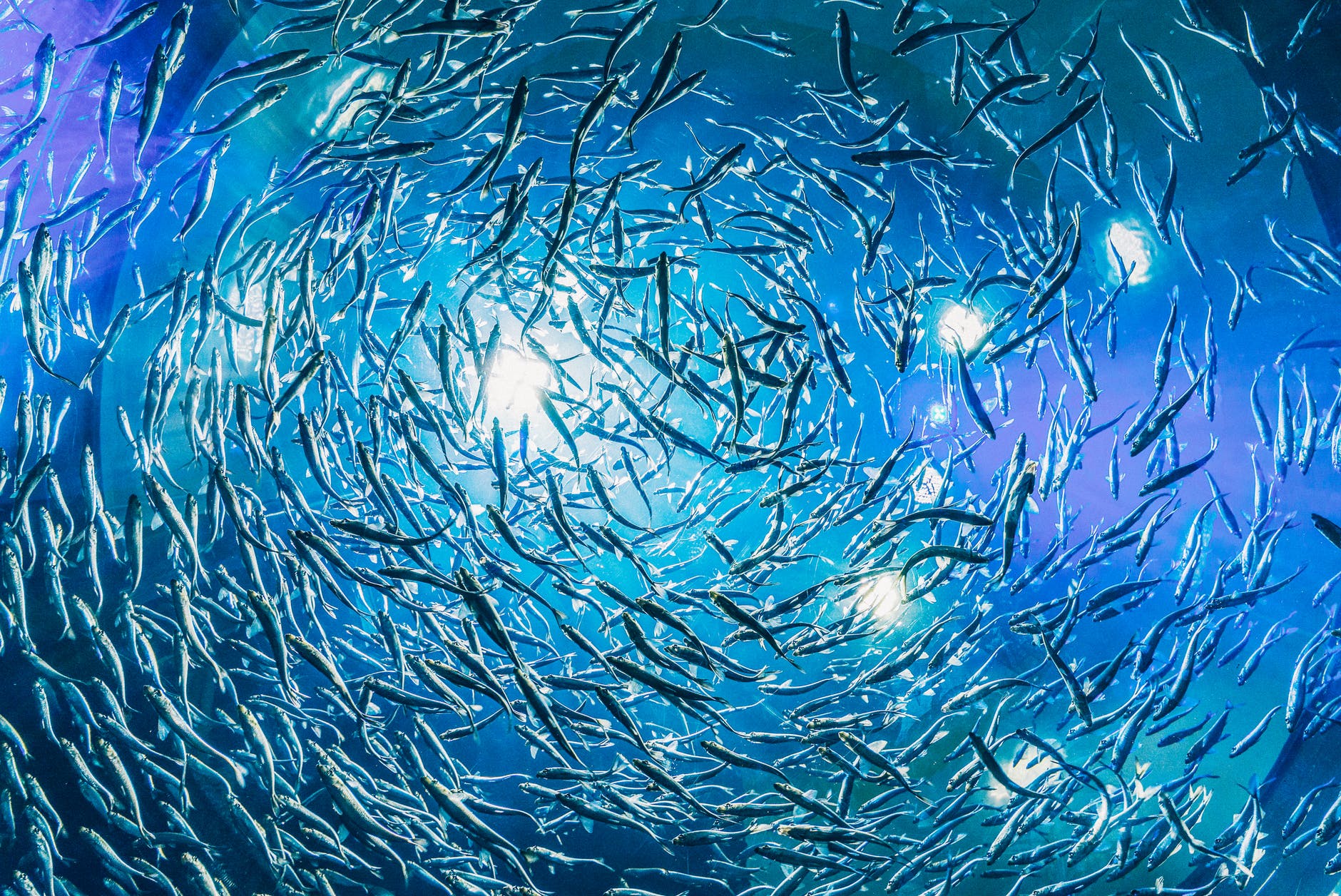
Photo by Harrison Haines on Pexels.com
‘Seaspiracy’ (Netflix) a must watch powerful documentary by Director Ali Tabrizi. It predicts dead oceans by 2048, if commercial fishing continues at its current rates, and that humankind can not live on a planet with dead oceans. The vital link between humanity, the planet and economics is highlighted throughout this documentary.
The film shows the human impact on marine life such as plastic marine debris, ghost nets and overfishing around the world. It argues that Commercial Fishing is the main driver of marine ecosystem destruction. What can be done to save our seas for the next generation? The stark conclusion of the documentary is that eating wild fish needs to stop and marine reserves needs to be established and protected.
The global fishing industry is destroying an eco-system that absorbs four times more carbon dioxide than the Amazon rainforest. A healthy eco-system in the ocean is essential to life on this planet as the ocean is our largest carbon sink. Whales and Dolphins (mammals) at the top of the food chain are crucial. When they go to the surface to breathe they fertilise the phytoplankton that absorbs the carbon dioxide.
Economics recognises only the benefit of pulling fish from the sea, and the financial incentives are huge for todays fishing industry, with a single Blue Fin Tuna reaching US$3m in the open market. This is not an industry that is building or growing or planting for the future or operating in any way that could be considered sustainable. There is no incentive for the fishing industry to protect or sustain fish populations. The documentary accuses commercial fishing as out of control, sometimes a criminal enterprise that has a damning environmental impact, that needs to be reined in and regulated.
The over-fishing of the oceans has been exacerbated by technological changes, powerful ships, huge trawlers that scour the sea floor. Stocks of Halibut are down -99%, Haddock down -99%, Blue Fin Tuna -97% and Cod -86%. In 1830 a single fishing vessel could take 1-2 tonnes of Halibut in a day, now an entire fleet will not take that amount in a year.
The supply of fish has reduced considerably, but the demand for fish remains the same. This is leading fishermen to greater extremes to catch the fish. Trawling the bottom of oceans is causing devastation to the sea floor. Its the equivalent of bulldozers in the Amazon rainforest, but we can’t see this because its hidden from sight. The industry is killing endangered species, discarding by-catch and pushing into territories that are not their own.
Currently the largest threat to dolphins and whales are plastics and fishing. The oceans are filled with plastic waste (shockingly 50% of plastic waste in the Pacific Garbage Patch is from discarded fishing nets). The international whaling ban in 1986 has not stopped Japan from restarting killing whales. Whales and dolphins are killed in a Japanese island of Taiji as the dolphins are considered a threat to the fish population. Dolphins are often killed as ‘by-catch’ when fishermen are fishing for a certain species of fish and discard others caught in the net.
Shark populations are crashing due to the multi billion pound shark fin industry worth around US$100 bn in Asia. Thresher Sharks are down -80%, Bull sharks -86%, Smooth Hammerheads -86%, Scalloped Hammerhead -99%. Sharks are at the top of the food chain and keep the balance of the food chain but its all falling apart as the documentary quotes that between 11,000 and 30,000 sharks are killed per hour as ‘by-catch’. This just demonstrates the scale of industrial fishing.
The economics of the fishing industry does not recognise the benefit of clean seas, good fish stocks or that the sea is the biggest carbon sink on the planet. This break down in the link between what is good for humanity and the planet and what is good economically is causing huge devastation.
Governments and Institutions are failing to protect the oceans and are failing the next generation. ‘Sustainability’ is a buzz word that is thrown around. Seaspiracy rejects the concept of sustainable fishing and criticises several marine conservation organisations, including the Earth Island Institute and its dolphin safe label and the sustainable seafood certifications of the Marine Stewardship Council. Organisations such as these generate their funding from the fishing industry and therefore have a direct conflict of interest.
What are our governments doing? Subsidies of over US$35bn are given to the fishing industry and these should be aligned to levels of fish stocks and protection.
We need supporters of the sea to set the rules. Environmentalists such as Sylvia Earle and David Attenborough, organisations such as Greenpeace. “We need to respect the oceans and take care of them as if our lives depended on it. Because they do” says Sylvia Earle.
There is an integrity and authority to these individuals and independent organisations that the government does not seem to be able to achieve. There were interviews with various organisations, including the EU fisheries minster, but all seemed useless and worthless. The EU Minister talked about sustainability as an abstract concept that would not be out of place in a university economics lecture, but failed to address that current fishing practices can not be sustainable if fish populations are being decimated.
Greenpeace called for restrictions on fishing, urging the government to focus on super-trawlers. During last year’s lockdowns in the UK, foreign supertrawler activity increased in key areas even while small fishing boats were confined to port. Campaigners believe there is strong public support for restricting them, and ending harmful practices such as bottom trawling, which rakes the seabed and disturbs vast swathes of marine life.
Chris Thorne, oceans campaigner at Greenpeace UK, said: “Setting catch limits in line with scientific advice is an absolute must, if fish populations are going to stand any chance of recovering”. He pressed ministers to set an example: “Since leaving the EU the government has a unique opportunity to bring in a ban, which will give fish space to recover. But until it does, our most important marine ecosystems will go on being plundered, fish stocks will continue to fall, and claims of being a ‘world leader’ in ocean protection will continue to be meaningless.”
Greenpeace commended the film for promoting various marine issues, but challenged the conclusion of abstaining from fish consumption, distinguishing between industrial fishing and traditional harvesting. Sylvia Earle left a different thought: ‘Hold up a mirror and ask yourself what you are capable of doing, and what you really care about. Then take the initiative, don’t wait for someone else to ask you to act.”

 Rebel Economics