

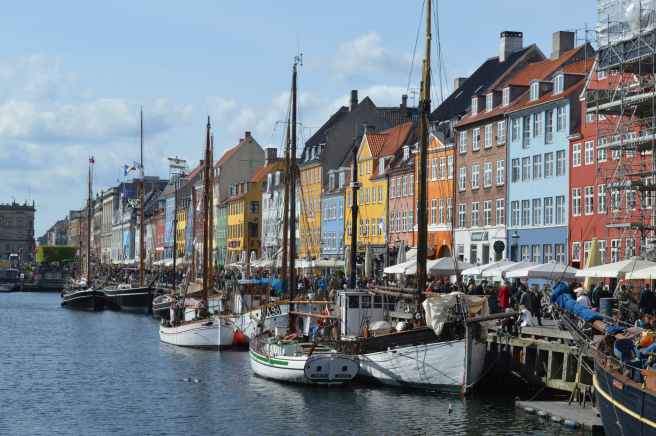
Denmark regularly tops the World Happiness Report and in 2018 was ranked amongst the top 3 out of 155 countries. In a country with long dark winters it might seem all the more surprising that they are ranked so high on the happiness report. Can the happy state of the Danes be attributed to the Danish economic situation? Is there something we can learn from the Danish culture in terms of managing economies?
There are ‘soft issues’, that are largely linked to the high levels of happiness, central to this is the concept of hygge. According to wikipedia hygge refers to “a form of everyday togetherness”, and can encompass eating together, warm fires, board games or social event. Danes are also a very healthy nation with low obesity rates and high levels of fitness. These soft factors, no doubt contribute to the psychological well being of the Danish.
From an economic perspective, many experts believe that the reputation for happiness is due to the equality of Danish society. There is not a huge difference between the living standards of the most wealthy and the least. Denmark has the lowest wealth gap of the OECD countries with the richest 10 pct of the population earning 5.2x the amount of the poorest 10 pct of the population. This compares to the US (3rd highest) where the richest 10% earn 18.8x the lowest 10 pct.
Denmark has first rate healthcare, education (no tuition fees and students get monthly support from the state), low poverty, clean streets, renewable energy and excellent public infrastructure. However it all costs and a tax rate of between 42% and 62% is the price Danish are willing to pay.
There is some protectionism in the housing market with stricter home ownership laws for overseas buyers. Non residents can’t buy property unless the person has previously resided in Denmark for at least 5 years, is an EU national working in Denmark or if a non EU national, has a valid residence or business permit. This limits the desire for the Danish property market as a financial asset class. In Copenhagen, despite rising house prices, the authorities have tried to keep the city centre family friendly and battle to maintain affordable housing affordable to keep the demographic mix healthy.
Danish happiness, in economic terms, could be indicative of a more equal society.

 Rebel Economics
👍😃 I just a conversation about how we manage education and social care in UK and referenced Denmark and Scandi tax system as a model
LikeLike
I’m moving there!!!
Sent from my iPhone
>
LikeLike